
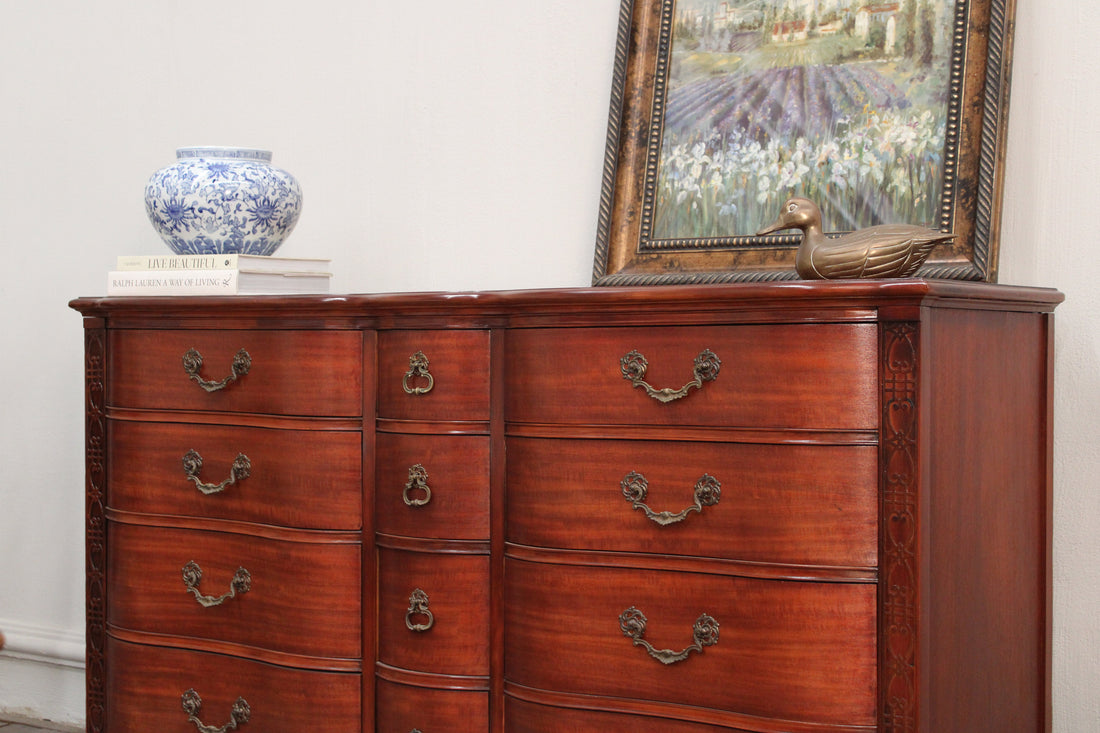
How to tell if a piece of furniture is antique: keys to recognizing authentic pieces with historical value
Antique furniture doesn't just beautify a space; it also tells a story. But how can you tell the difference between a truly antique piece and a simple vintage imitation?
What structural elements help identify a piece of furniture as truly antique?
One of the most reliable ways to determine the authenticity of a piece of furniture is to observe how it is made. Before the 20th century, most pieces were handmade, without industrial machinery.
For example, if you examine the inside of a drawer and notice irregularly carved dovetail joints, it is very likely that you are looking at a piece of furniture from before 1850. On the other hand, if the joints are symmetrical and perfect, they were surely made with modern machinery.
The same applies to tool marks: antique furniture often has marks from a hand plane or straight saw.
A useful trick is to compare an old drawer with a modern one. The manufacturing differences are obvious.
If you're looking for examples of drawers with a design inspired by classic styles but adapted to the present, Casa Perlo's collection of drawer units offers pieces that retain that artisanal spirit, with modern materials.
What types of wood and finishes reveal the age of a piece of furniture?
The type of wood can tell you a lot about the age of a piece. The most commonly used woods in antique furniture were mahogany, oak, walnut, and cherry. These woods are heavy, dense, and very durable. Furthermore, when you touch them, you'll notice a warm, natural texture, quite different from that of modern MDF boards.
It's also important to look at the finish. Before the widespread use of synthetic varnishes, furniture was coated with oils, waxes, or shellac, which gave a softer, less plastic-looking sheen.
If the finish looks perfect and shiny like a piano, it's probably a replica or a recent restoration.
Sometimes, fine woods were combined with cheaper ones for the interior of the furniture.
This contrast is also a good sign. You can see furniture with that balance between solidity and design in the desk collection , which revives vintage aesthetics with contemporary functionality.
What natural signs of wear and tear help to verify if a piece of furniture is truly antique?
The passage of time leaves marks that, far from diminishing value, are proof of authenticity. Here are some signs to look out for:
- Natural patina : A gently worn surface, with irregular tones due to use or exposure to the sun.
- Signs of use : Scratches, stains, corners softened by rubbing and areas darkened by frequent contact.
- Insect traces : In very old furniture it is possible to find small perforations from woodworm or moths, although this should be checked.
These imperfections, when well preserved, speak of a living piece. An antique chair with a seat worn from decades of use can be more valuable than a soulless, complete restoration.
For those looking to integrate these types of pieces into their home, chairs and armchairs with natural finishes are a good starting point.
How do origin, design, and hardware influence the authenticity of furniture?
Antique furniture was often produced in limited series or entirely by hand, so having information about its origin adds value. Maker's marks, inscriptions under drawers, period labels, or engraved stamps help confirm its authenticity.
The design and hardware also provide important clues. Wrought iron handles, aged brass locks, and irregular hinges are typical of 18th- and 19th-century pieces. One detail to note is that the screws on antique furniture often have irregular, handmade heads.
If you see modern Phillips screws, it's probably a restoration or a replica.
In furniture such as display cabinets, these details are especially noticeable. You can explore examples inspired by colonial designs within the display cabinet collection , where the aesthetic remains true to the proportions and materials of the past.
How can I appraise an antique piece of furniture without being an expert?
If you are not a professional restorer or collector, you can still follow these steps to identify if a piece is antique:
1. Check the back and inside of the drawers. That's where it's most noticeable if it was handmade.
2. Do a visual symmetry test . Antique pieces are not perfectly straight.
3. Observe the type of wood and whether it has natural grain or is veneered.
4. Touch the finish . If it's very plasticky or shiny, it might be modern.
5. Assess the wear and tear . Antique furniture should not look new.
If the piece has several of these signs, it is very likely that it is a piece of furniture with a history.
Frequently Asked Questions
What is the difference between an antique piece of furniture and a vintage piece?
A piece of furniture is considered antique when it is over 100 years old, while the term "vintage" refers to pieces between 20 and 99 years old. Antiques are often more valuable due to their rarity and handcrafted nature.
Can I find new furniture with an antique style?
Yes. Many designers recreate furniture with classic inspiration. For example, in Casa Perlo's table collection you can find pieces that evoke colonial or rustic designs, but are manufactured using modern techniques.
What do I do if I can't identify the origin of a piece of furniture?
You can go to an antique dealer, restorer, or auctioneer. There are also specialized forums or apps for identifying furniture by image, although an expert's opinion will always be more reliable.
Is it possible for a piece of furniture to have original parts and modern parts?
Yes, hardware, legs, or countertops are often replaced for functional reasons. This doesn't always reduce the value, but it does affect its overall authenticity.
Every antique piece of furniture is a piece of history that you can have in your home. Knowing how to identify its materials, construction, wear and tear, and origin not only allows you to appreciate what you have, but also to make better decisions if you wish to buy, restore, or preserve a meaningful piece.
Integrating these elements into your decor is a way to connect with the past without sacrificing the present. Because ultimately, antique furniture doesn't just take up space: it tells stories.